
Signs Your Foundation Needs Help
Houses tell you when the foundation is moving. Here are the signs we see most on the Texas Gulf Coast, what each one means, and how soon to do something about it.
Get a Free Floor SurveySeven Signs, Top to Bottom
Walk your house with this list. Tap a number to jump to what it means.
1Sloping or Bouncy Floors
Keep an eye on itA ball rolls on its own, or the floor gives underfoot.
On a slab, part of the foundation has settled or heaved. On pier & beam, a pier sank or a sill or beam lost strength. In older Island homes it’s often both.
2Doors & Windows That Stick
Have it measuredDoors that used to close now rub, swing open on their own, or won’t latch.
The frame got pulled out of square as the house moved. One sticky door in humid August is normal; several, or a change after a storm, is not.
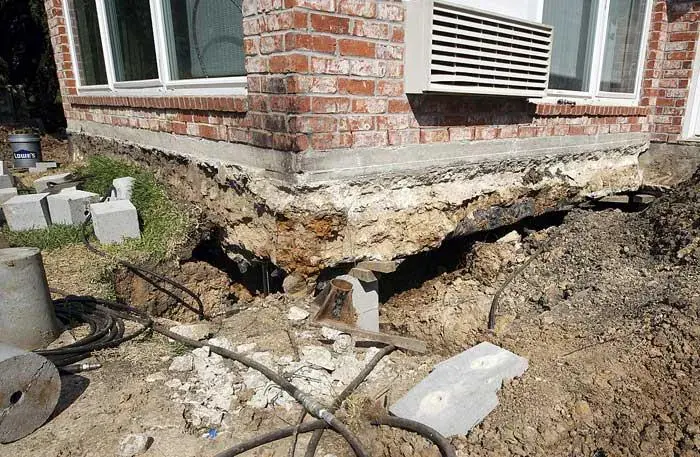
3Stair-Step Cracks in Brick
Have it measuredCracks that zig-zag up the mortar outside, usually near a corner or under a window.
The brick is following the foundation. Wide cracks, cracks you can fit a coin in, or ones that keep growing mean it’s still moving.
4Cracked Floor Tile
Have it measuredA crack running across several tiles, often through the kitchen or a hallway.
Tile can’t flex, so it shows slab movement first. A single cracked tile can be a dropped pan; a line of them is the slab.
5Gaps at Baseboards & Cabinets
Keep an eye on itA gap opening under baseboards or between the cabinets and the wall or ceiling.
Part of the floor dropped away from the walls. Measure the gap and check it again in a month.
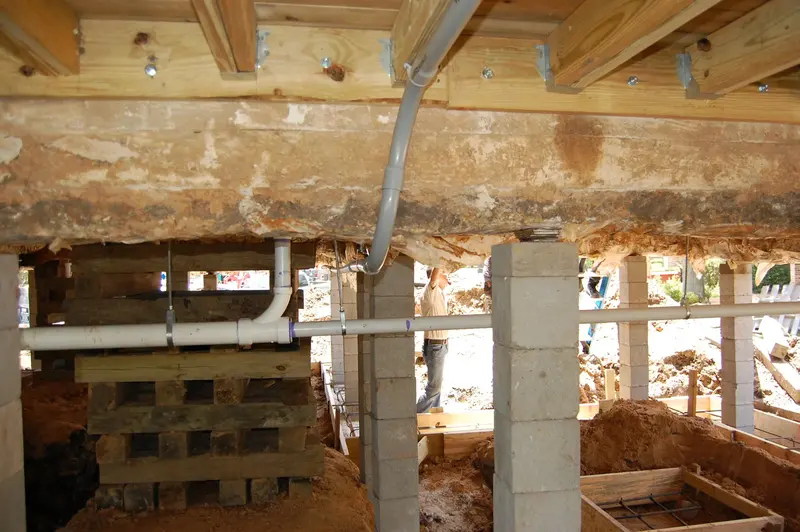
6Standing Water Under a Pier & Beam House
Call soonWater that sits in the crawl space for days after a rain.
Wet ground under the house softens the soil the piers sit on and rots sills and beams from below. Drainage and support both need a look.
7More Piling Showing After a Storm
Call soonYou can see more of your house pilings than you could before.
Storm water carried the sand away. What’s left in the ground is what’s holding the house.
Why Gulf Coast Houses Move
Inland, from Dickinson and League City up to Houston, most houses sit on clay that swells when it's wet and shrinks when it dries. The side of the house that stays wetter moves differently from the side that doesn't.
On the Island and Bolivar it's sand: it drains fast, but it shifts and it washes out in storms. Add salt air working on old wood piers and sills, and you get the mix of problems on this page.
Most of it is fixable, and it costs less the earlier it's caught. See what repairs cost.
Free Floor Survey
Tell us which signs you've noticed. We'll come measure the floor at points across the house and tell you straight whether it needs anything.
📞 (409) 750-3448